My eyes glazed over as I sat in the auditorium on the first day of my Western Art History class. Endless images of European cathedrals were flashing onto the big screen behind the podium. Curious to see if I was the only one struggling against boredom, I glanced around the room. To my surprise, most of my fellow students were transfixed.
At long last, the slideshow ended. The lights came up, and the professor stepped to the microphone. “How many of you have been to France?” he asked.
More than half of the students raised their hands. The people who had seen those magnificent spires firsthand were the ones who eagerly participated in the ensuing discussion.
Years later, when I went to Italy and saw some of the great cathedrals for myself, I understood that experiencing these living testaments to human endeavor made all the difference.
Similarly, during a visit to Fort Pulaski near Savannah, Georgia, I gained a deep sense of the basic hardships endured by soldiers at war. Even without the thunder of cannons, the roar of rockets, or the smell of powder, sweat, and fear, I could vividly imagine the men on a hot summer night, in their soiled woolen uniforms, with hunger in their bellies, amid swarms of mosquitos. Even those on the losing side of history were real people with families and fears.

When I was writing my debut novel, A Moon Garden, I kept that in mind. Centered on the life of a British Army captain who fought in the American Revolution, it’s a timeless sweeping tale of love, war, honor, and sacrifice.
Soon after finishing the draft, I came across Thomas Gainsborough’s 1782 portrait of Lieutenant Colonel John Hayes St. Leger. I was captivated.
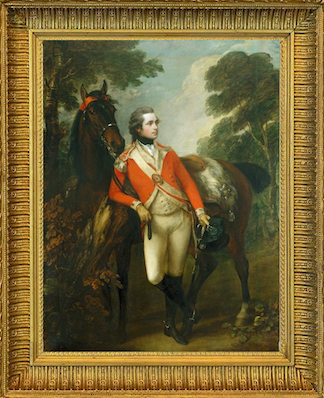
My curiosity about the handsome officer set me off on a journey of discovery. Once I began to uncover St. Leger’s secrets, I knew I had to tell his story. My latest book, The Man in the Way, is a biographical novel about John Hayes St. Leger. It’s a forgotten hero’s epic of loyalty, betrayal, and empire.
Why Art*Connections?
Finding that Gainsborough portrait forever changed the way I look at art. A painting can be a gateway to truth. If we never look beyond the surface, we will never unveil the stories they may hold. Here on Art*Connections, I share discoveries from art history, personal travels, and the narratives behind the brushstrokes—inviting you to look closer, to ask questions, and to find some answers of your own.
Roxane Gilbert
 Art*Connections