Balmoral Castle, a residence of the British Royal family in Aberdeenshire, Scotland, belonged to the Farquharson family in 1848, when Prince Albert (1819-1861) first leased it for the use of himself and his wife, Queen Victoria (1819-1901). They enjoyed themselves so much at this beautiful Highlands estate, that they purchased it in 1853.
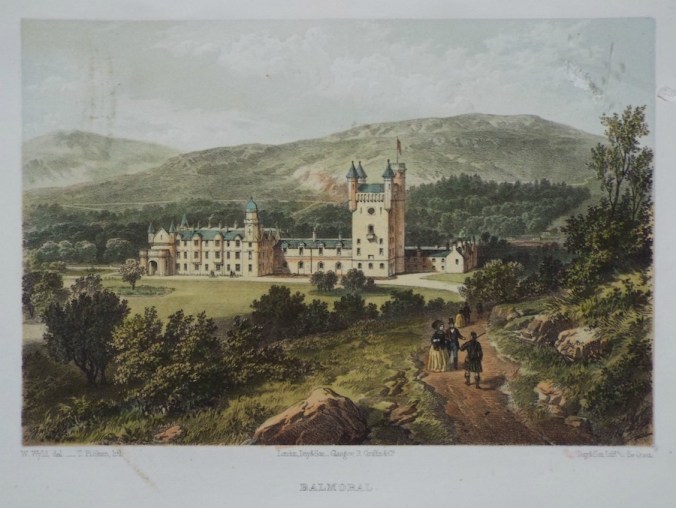
When the Queen and Prince Consort began spending time at Balmoral, one of the attendants employed there was 22-year-old John Brown (1826-1883) from the nearby village of Crathie. He soon became the outdoor servant to Prince Albert. The Gaelic term for his position is gillie. It was Mr. Brown’s duty to accompany the Prince while he hunted, acting as his shooting guide and gun-loader.
Prince Albert determined quickly that Mr. Brown also had the skills to lead the Queen’s horse on the rough terrain, so this became one of his assigned tasks. As gillie, it was also up to Mr. Brown to carry her across the running creeks on his plaid.
It’s clear from the Queen’s personal journal that John Brown spent a lot of time with the Royal couple, and that she enjoyed his company. For his part, Mr. Brown was comfortable and in his element during the outings with Victoria and Albert.
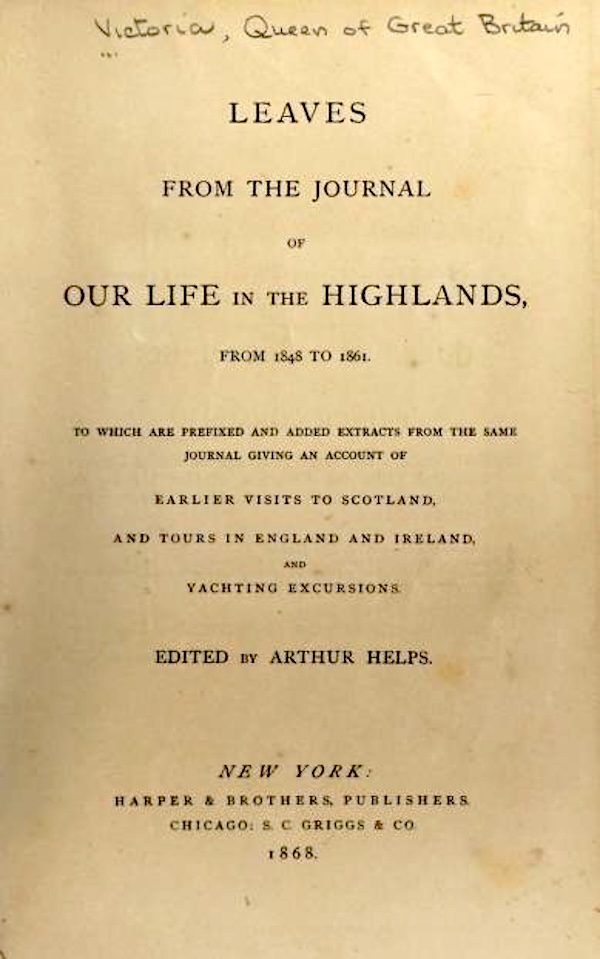
In Leaves from the Journal of our Life in the Highlands from 1848 to 1861, Queen Victoria recounted a conversation she had with Mr. Brown on October 7, 1859:
I had a little whisky and water, as the people declared pure water would be too chilling. We then rode on without getting off again, Albert talking so gayly with Grant; upon which Brown observed to me in simple Highland phrase, “It’s very pleasant to walk with a person who is always ‘content.’” Yesterday, in speaking of dearest Albert’s sport, when I observed he never was cross after bad luck, Brown said, “Every one on the estate says there never was so kind a master; I am sure our only wish is to give satisfaction.” I said they certainly did.
Albert was in declining health when he was exposed to typhoid fever at the end of November 1861. He became sick a few days later and died on December 14, at age 42. Victoria went into seclusion. Her daughter, Princess Alice, convinced the Queen to go to Balmoral, where she had spent many happy hours.
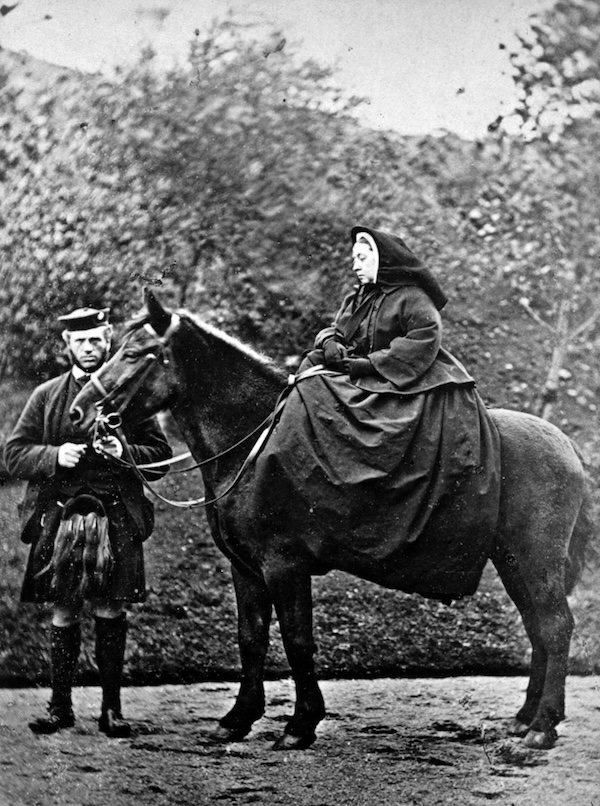
After Albert’s death, John Brown began attending to Victoria full-time. She always felt secure in his presence. People began to take note of the casual tone he took when addressing her. Edward, Prince of Wales, (the future King Edward VII) was particularly disturbed by the easy familiarity that transpired between his mother and her servant.
Queen Victoria commissioned the painting called Queen Victoria with John Brown by English artist Charles Burton Barber (1845-1894) in 1876. She presented it to John, her loyal companion, on the anniversary of Prince Albert’s birth.
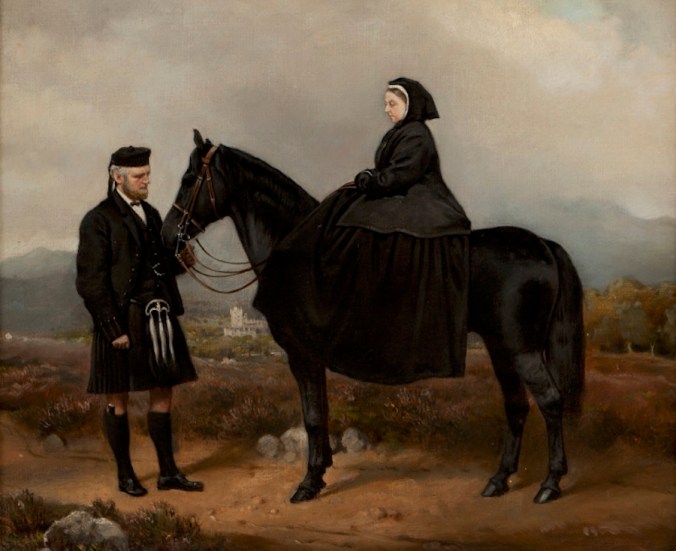
On March 27, 1883, John Brown died at Windsor Castle after a brief illness. It was widely believed that it was his devotion to Victoria that caused his premature death at age 56. Instead of taking to his bed at the first symptoms, he pressed forward in his service to his Queen.
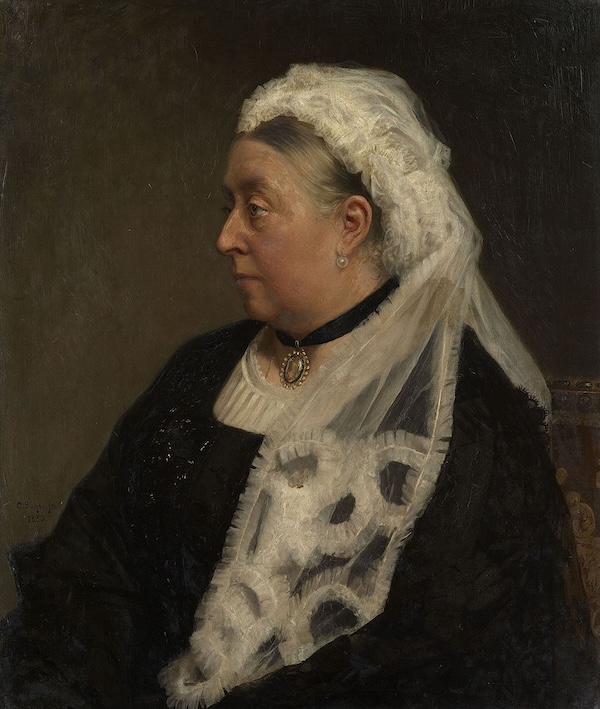
Once again grieving, Victoria sent for German artist Karl Rudolf Sohn (1845-1908), who was well known for his skill as a portrait painter. She commissioned him to paint John Brown (d.1883) at Frogmore.
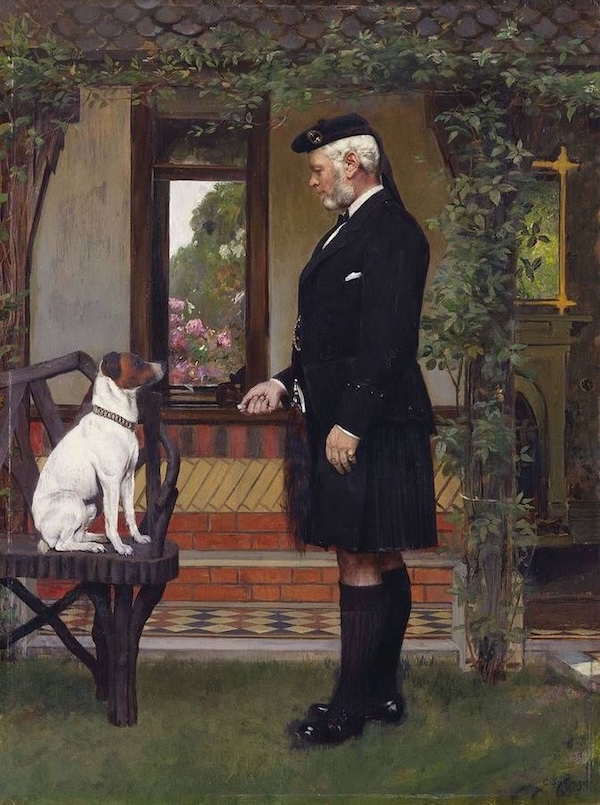
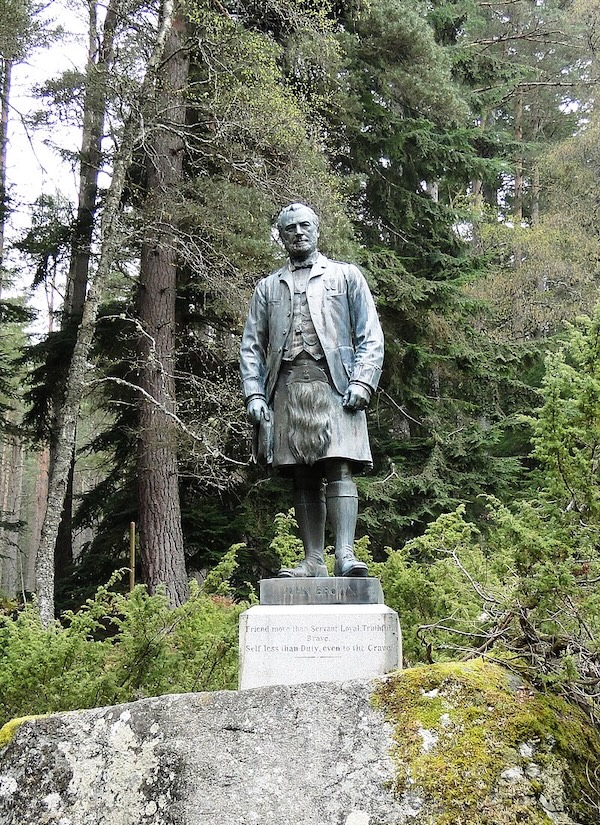
Victoria also commissioned a statue of John Brown by Austrian-born British sculptor Joseph Edgar Boehm (1834-1890). She had it installed on the grounds of Balmoral at a hidden spot, where the Prince of Wales would be unlikely to discover it after her death. She strongly suspected that if the newly crowned King Edward VII found it, he would have it destroyed.
When Queen Victoria died on January 22, 1901, at age 81, she left detailed instructions for her funeral. Among the mementos placed in her casket were a lock of John Brown’s hair and his picture, concealed from her family by a bouquet of flowers.
About the Artist: Karl Rudolf Sohn
Karl Rudolf Sohn was born on July 21, 1845, in Düsseldorf, German Confederation. He was born into a family of artists, but initially he decided to become an engineer. After finishing his studies at Polytechnic School in Karlsruhe, he enrolled at Kunstakademie Düsseldorf to study history painting.
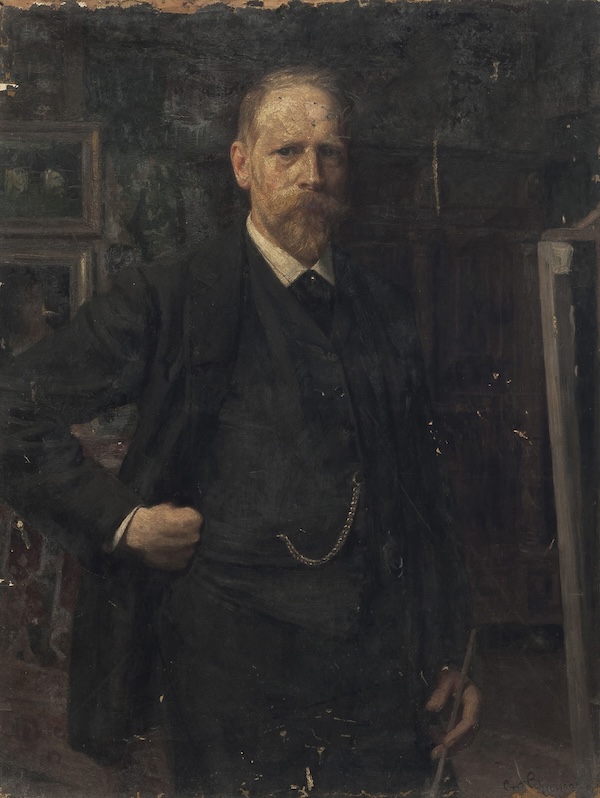
Many of Sohn’s paintings convey a romantic mood. Perhaps that was a factor in Queen Victoria’s invitation to the artist to come to England.
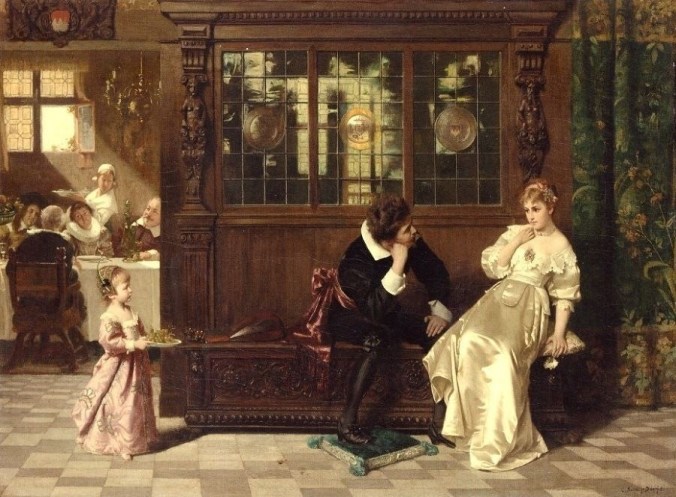
In the years 1882-1886, he painted the portraits of the Queen and several of her family members.
On August 29, 1908, Karl Rudolf Sohn died in the city of his birth. He was 63-years old.
Discover more from Art*Connections
Subscribe to get the latest posts sent to your email.
 Art*Connections