Have you ever wondered about the origin of the phrase the naked truth? Ever since I began writing historical fiction, I have had this almost obsessive desire to know the etymology of words, slang expressions, and clichés. In my novel A Moon Garden, when I put words in the mouth of an 18th-century gentleman living in a quaint Devon village in the heart of Dartmoor, I didn’t want him spouting terms that were not commonly used at that time and in that place.
The naked truth is one of those phrases that frequently pops up in everyday conversation and in books.
One literary example is found in Kidnapped by Robert Louis Stevenson, published in 1886.
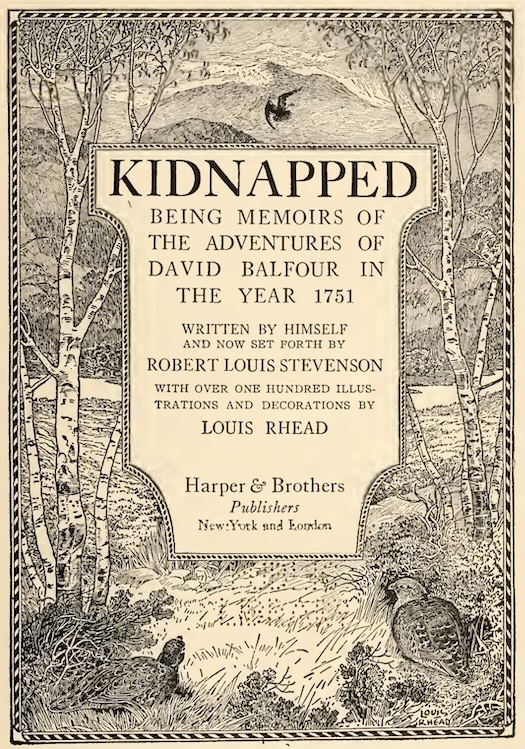
Here is the passage:
I do not know if I am as well as I should be,” said I, looking at Alan; “but the little money we have has a long way to carry us.”
Alan took his under-lip into his mouth, and looked upon the ground.
“David,” says he at last, “I’ve lost it; there’s the naked truth.”
“My money too?” said I.
“Your money too,” says Alan, with a groan. “Ye shouldnae have given it me. I’m daft when I get to the cards.”
The next instance is from a charming book, where, by coincidence, the action takes place in Dartmoor. Published in 1904, The Affair at the Inn is a collaborative effort by four authors.

This quoted bit is by Allan McAulay:
Of course I have heard fellows talk about kissing: I have always thought it a disgusting habit myself, and discouraged it, even in near relations. But now — now it seemed suddenly different — she seemed meant to be kissed — and by me —and well, I kissed her — that’s the naked truth, and the moment I had done it I would have given worlds not to have done it, or else to have the right to do it again. A man is a man firstly, I suppose; but secondly, at least, he ought to be a gentleman.
And how about this? The subtitle of the autobiography of Hollywood actor Leslie Nielsen (1926–2010) is The Naked Truth.
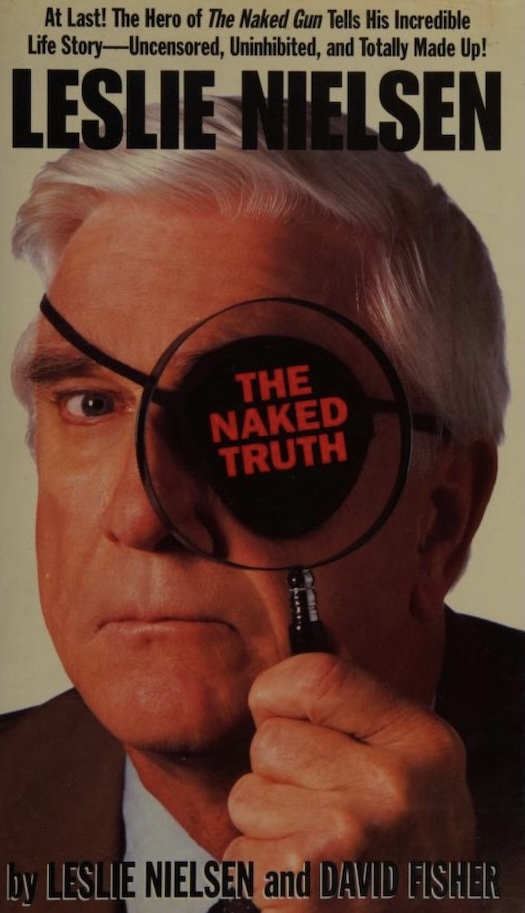
While yodeling enabled me to put my mind and body in harmony, it did not provide the answer for which I’d been searching. But what it did do was help me understand the real, unabashed, no-kidding-this-time, naked truth. And that is, that no matter how far or long we search for serenity, the only place it can be found is inside ourselves. And that’s the naked truth.
Okay, but where did the phrase originate? And how did the truth get naked?
The phrase naked truth [nudaque veritas] was used long ago by the Roman poet Quintus Horatius Flaccus, commonly known as Horace (65–8 BCE). Here it is in his Ode I.24:
Then does endless sleep press upon Quintilius?
When will modesty and the sister of justice, pure faith, and naked truth,
ever find any equal to him?
A poem written by English statesman, diplomat, and poet Matthew Prior (1664-1721) in 1718 is based on an ancient fable that explains how Truth lost her clothes.
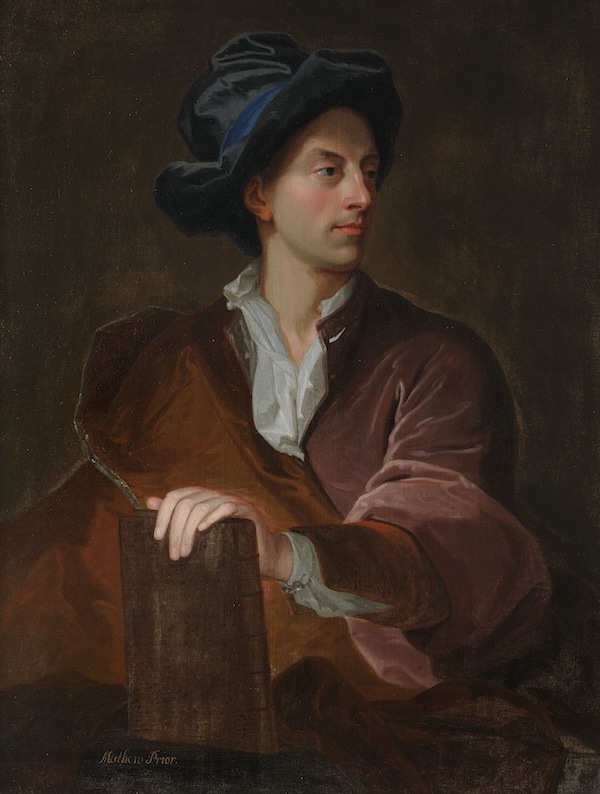
As a student at Westminster School in London, young Matt would have studied the poetry of Horace in the original Latin. No doubt the phrase the naked truth was familiar to him.
TRUTH AND FALSEHOOD. A TALE.
ONCE on a time, in sunshine weather,
Falsehood and Truth walk’d out together,
The neighbouring woods and lawns to view,
As opposites will sometimes do.
Through many a blooming mead they pass’d,
And at a brook arriv’d at last.
The purling stream, the margin green,
With flowers bedeck’d, a vernal scene,
Invited each itinerant maid
To rest a while beneath the shade.
Under a spreading beech they sat,
And pass’d the time with female chat;
Whilst each her character maintain’d;
One spoke her thoughts, the other feign’d.
At length, quoth Falsehood, Sister Truth,
(For so she call’d her from her youth)
What if, to shun yon sultry beam,
We bathe in this delightful stream;
The bottom smooth, the water clear,
And there’s no prying shepherd near?—
With all my heart, the nymph replied,
And threw her snowy robes aside,
Stript herself naked to the skin,
And with a spring leapt headlong in.
Falsehood more leisurely undrest,
And, laying by her tawdry vest,
Trick’d herself out in Truth’s array,
And ‘cross the meadows tript away.
From this curst hour, the fraudful dame
Of sacred Truth usurps the name,
And, with a vile, perfidious mind,
Roams far and near, to cheat mankind;
False sighs suborns, and artful tears,
And starts with vain pretended fears;
In visits, still appears most wise,
And rolls at church her saint-like eyes;
Talks very much, plays idle tricks,
While rising stock her conscience pricks;
When being, poor thing, extremely gravell’d,
She secrets ope’d, and all unravell’d.
But on she will, and secrets tell
Of John and Joan, and Ned and Nell,
Reviling every one she knows.
As fancy leads, beneath the rose.
Her tongue, so voluble and kind,
It always runs before her mind;
As times do serve, she slyly pleads,
And copious tears still show her needs,
With promises as thick as weeds—
Speaks pro and con, is wondrous civil,
To-day a saint, to-morrow devil.
Poor Truth she stript, as has been said,
And naked left the lovely maid,
Who, scorning from her cause to wince,
Has gone stark-naked ever since;
And ever naked will appear,
Belov’d by all who Truth revere.
Now you know the story behind the naked truth.
About the Artist: Hyacinthe Rigaud
Hyacinthe Rigaud was born on July 18, 1659, in Perpignan, Crown of Aragon, which was ceded to France by Spain with the signing of the Treaty of the Pyrenees in November of that year.
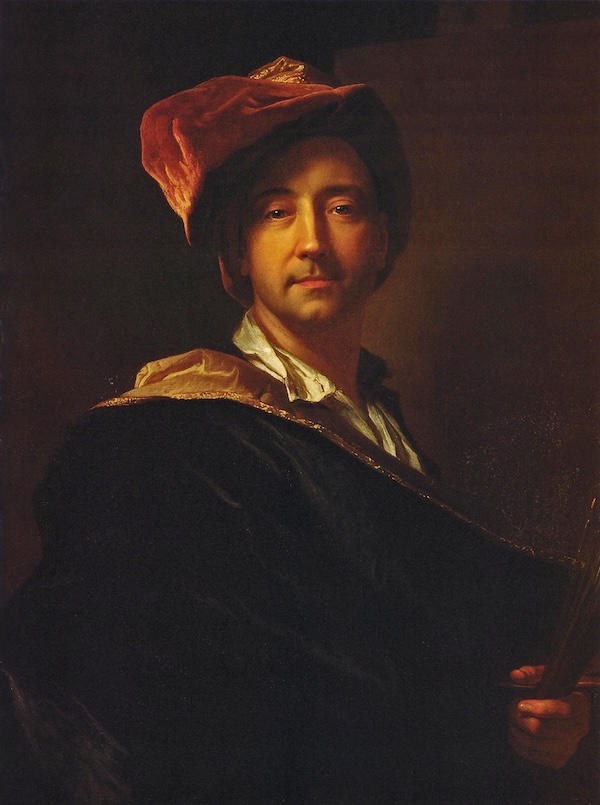
As a boy, Mr. Rigaud apprenticed in his father’s tailor shop, but it wasn’t long before he decided to become an artist. He moved to Paris in 1681 and received his first Royal commission seven years later. After that, most of his portraits were painted for the French court.

Matthew Prior was in France, serving King William III of England, Ireland, and Scotland as Secretary to the Embassy in Paris in 1699, at the time his portrait was painted by Mr. Rigaud.
Hyacinthe Rigaud died in Paris on December 29, 1743. He was 84.
Discover more from Art*Connections
Subscribe to get the latest posts sent to your email.
 Art*Connections