In August of 1792, Louis XVI of France was arrested. A month later, the monarchy was abolished. Stripped of his Royal inheritance, the deposed king was now known as Citizen Louis Capet. He was tried and convicted of treason and executed in January in 1793.
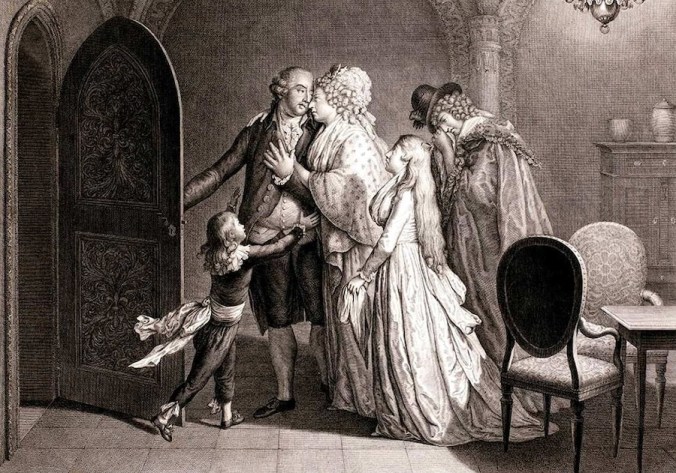
Across the Channel, the British were wary, as they nervously consumed the news of events in France. Following the storming of the Bastille prison in Paris in July of 1789, and the subsequent months of intensifying violence, their patriotism and veneration for King George increased.
During this period of heightened vigilance, the Prince of Wales and the Duke of York paid a visit to the Tower of London to spend a few hours with the soldiers on duty.

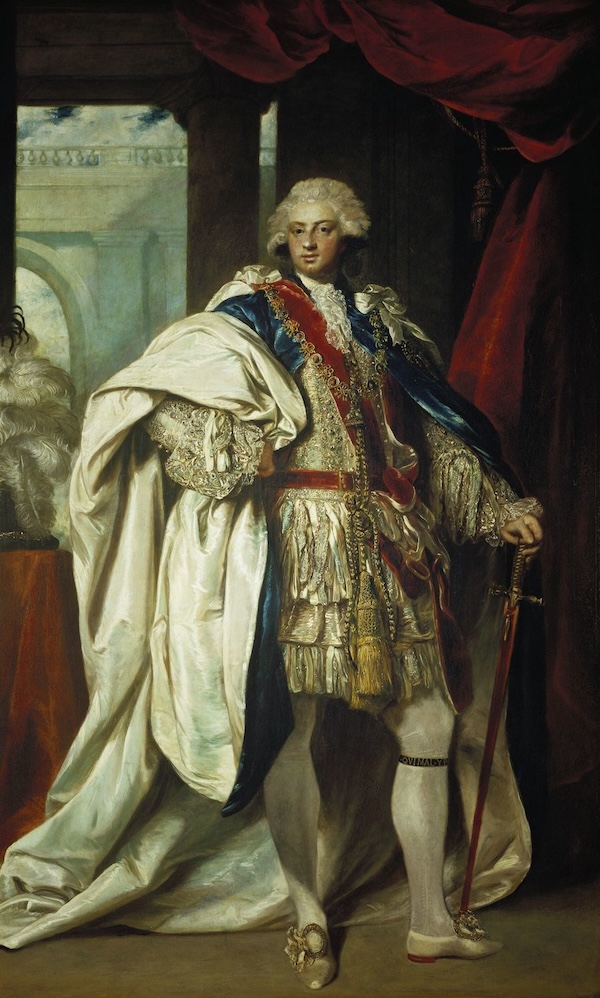
On a cloudy day in December of 1792, accompanied by the hero of my recently finished historical novel, they ate breakfast with the soldiers, inspected recent renovations, and then toured the grounds. The artillerymen cheered loudly as they walked by, and all swore their allegiance and vowed to defend the Royal brothers with their last drops of blood.
As I sat at my desk in the USA, writing about the Tower of London, I was overcome by an urge to go see it for myself. Fortunately, it didn’t matter that time travel was not an option. The ancient stones and bricks that formed the walls of the palace and fortress were put in place in 1078, the year that William the Conqueror had it constructed. Despite some later additions, I would still come away with a sense of what my hero had experienced.
Rain was a possibility, on an overcast day in early March. But strong atmospheric winds made it more likely that the clouds would dissipate rather than build. I enjoyed the hour walk from my hotel, particularly as I strolled along the River Thames.
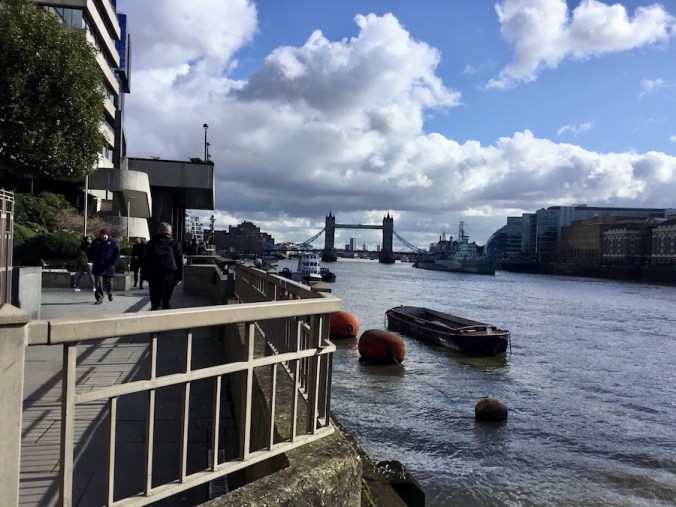
Tours at the Tower are self-guided, but you can start off with an introductory lecture by one of the Yeoman Warders (or Beefeaters). These men and women are steeped in knowledge, and they provide the visitors with interesting stories, unusual anecdotes, and plenty of laughs.

As an American, I’m fairly ignorant about the details of the British Monarchy. I first learned about the child-King Edward V and his younger brother Richard, Duke of York, from the fascinating monologue offered by the Yeoman Warder who addressed our group, as we stood against the backdrop of the iconic White Tower.

Edward V was born in 1470. He was 12-years old when his father, King Edward IV, died in April of 1483. It wasn’t long before his uncle and protector betrayed him. He maneuvered to have Edward and his siblings delegitimized, claimed the throne for himself, and then went on to rule England as King Richard III.
French historical artist Paul Delaroche (1797-1856) created a poignant narrative portrait called The Sons of Edward, which is now in the collection of the Louvre in Paris. It depicts the frightened, doomed boys, huddled together on a bed. A small white and brown dog stands guard, attentively facing the closed door of their prison, boldly prepared to defend them.

After Edward and his nine year old brother Richard, Duke of York, were locked away in the Tower of London by their uncle in April 1483, it was only a matter of days until they disappeared. They were never seen again.
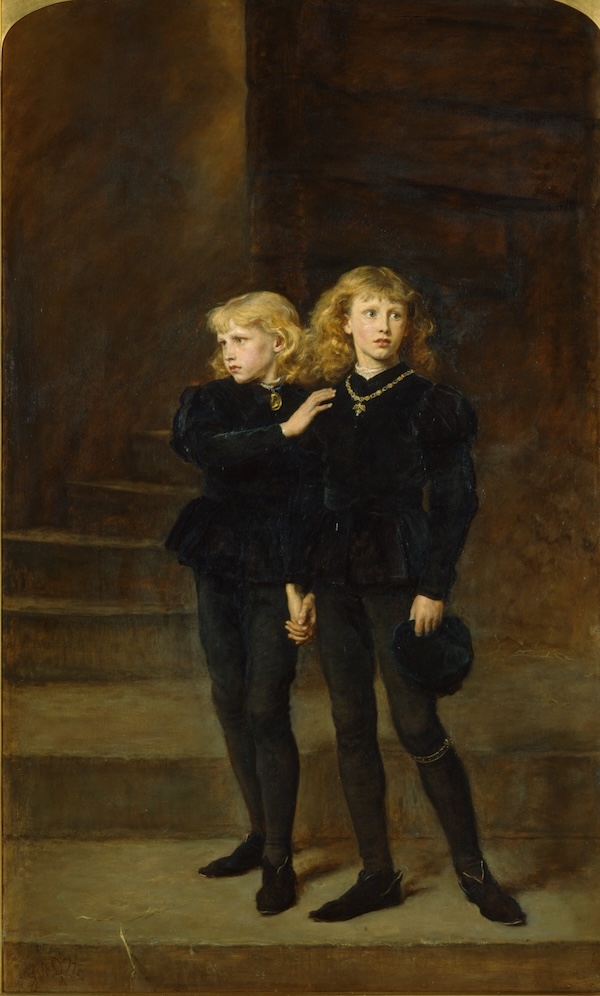
It is widely believed that the boys were murdered. In 1674, during renovations ordered by King Charles II, workmen discovered a wooden chest buried approximately 10 feet beneath a staircase. When they opened it, they beheld the skeletons of two children.

The King had the bones reinterred in Westminster Abbey in a white marble urn designed by Sir Christopher Wren. Although modern DNA testing might determine for certain if these are the remains of the Royal brothers, Queen Elizabeth II and the Church of England refused to allow it, citing ethical concerns about violating the sanctity of the deceased.
About the Artist: Paul Delaroche
Paul Delaroche was born on July 17, 1797, in Paris, France. He was the son of a prominent art dealer. In 1832, he became a professor at École Nationale Supérieure des Beaux-Arts.
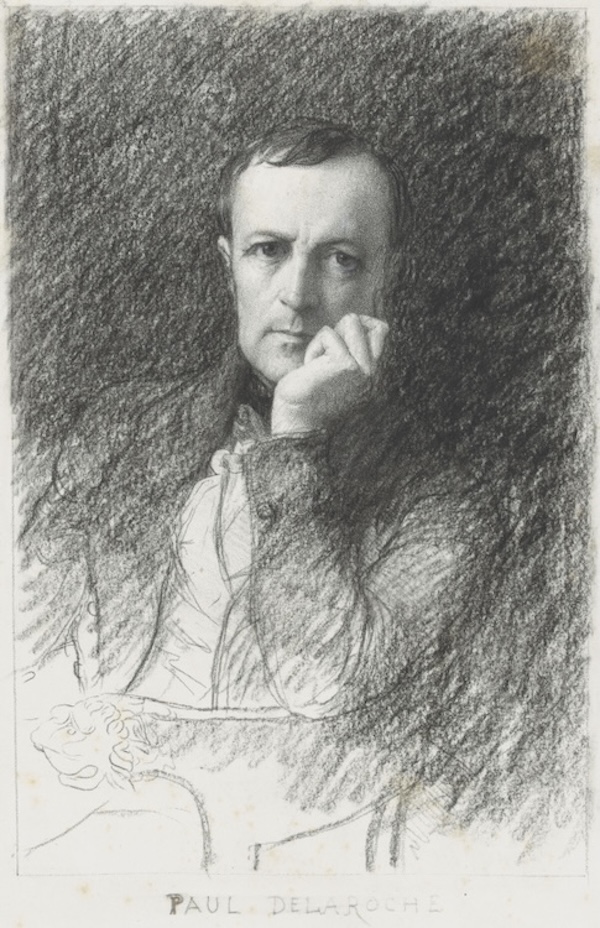
Mr. Delaroche’s sympathetic portrayals of scenes from British history earned him popular acclaim in England. In The Execution of Lady Jane Grey, which now resides at the National Gallery of London, the artist portrays the 17-year old Queen of England, whose reign lasted only nine days. The Privy Council of England deposed the hapless girl and replaced her with her cousin, Mary I. On February 12, 1554, Lady Jane was executed at the Tower of London.

Mr. Delaroche also painted scenes from French history and created works with biblical themes. In 1835, he married the love of his life, 21-year-old Louise Vernet. When she died 10 years later, he never got over his shock.
On November 4, 1856, Paul Delaroche died in Paris. He was 59.
Discover more from Art*Connections
Subscribe to get the latest posts sent to your email.
 Art*Connections