One of the elements that makes classical art so compelling is that it serves as a portal to the past. You can evaluate a painting from a purely aesthetic perspective, or you can scratch beneath the surface and discover an untold story.
Edward Matthew Ward (1816-1879) was an artist who consciously put his masterful skills to use to provide a pointed look at significant people, places, and events from the 17th and 18th centuries.

Perhaps Mr. Ward was influenced by his friendship with English historian, poet, and politician Thomas Babington Macaulay, Baron Macaulay (1800-1859). He was the author of The History of England from the Accession of James the Second published in 1848.

I was particularly drawn to Edward Matthew Ward’s painting The Disgrace of Lord Clarendon, because I recently read Twenty Years After, the sequel to The Three Musketeers by Alexandre Dumas père, and I am currently immersed in the next installment, The Vicomte of Bragellone. Among the plot hooks in these books is the drama surrounding the fall of Charles I, his execution in 1649, and the subsequent rise of Charles II, following Oliver Cromwell’s death in 1658.

The Disgrace of Lord Clarendon captures the poignant moment in 1667, when Edward Hyde, Earl of Clarendon, who served both Charles I and Charles II, was unceremoniously removed from his position as Lord Chancellor of England. He had been appointed to that post by King Charles II in 1660, immediately following the Restoration of the Stuarts.

Lord Clarendon’s role as a faithful advisor to the King was strengthened by the marriage in 1660 of his daughter, Anne Hyde, to the King’s brother James, Duke of York. (Anne died of breast cancer in 1671, before her husband’s accession to the throne as James II, King of England and Ireland, in 1685.)
Palace intrigues, ill-health, and military setbacks contributed to Lord Clarendon’s slipping grip on power. He ignored those who encouraged him to retire. In 1667, Lord Clarendon was impeached for breaches of Habeas Corpus, specifically for sending prisoners to places outside of England without the benefit of trial. The King refused to defend him. Three months after the moment captured in The Disgrace of Lord Clarendon, he fled to France, where he lived the remainder of his days in exile. He died in Rouen in 1674, at the age of 65.
About the artist: Edward Matthew Ward
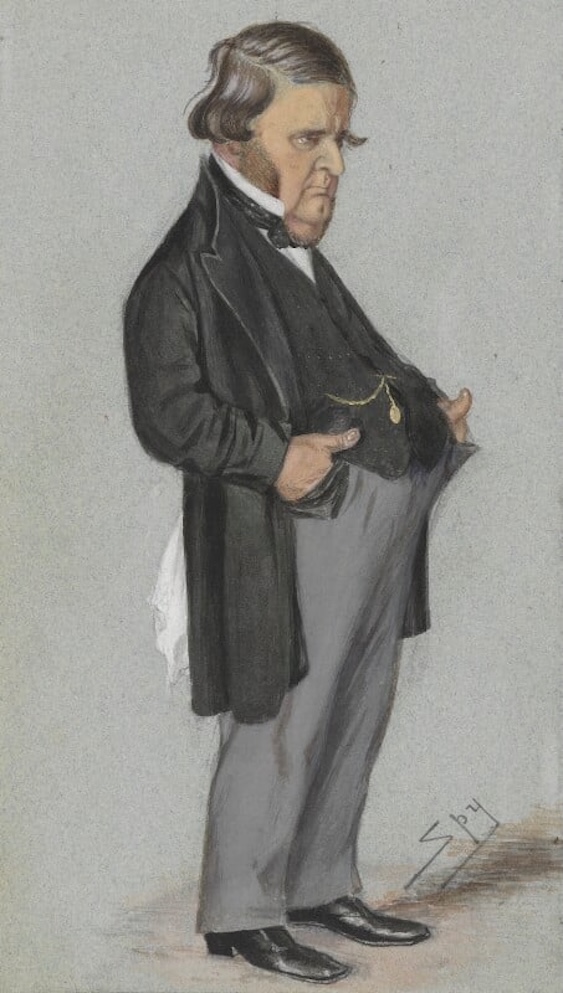
Edward Matthew Ward was born on July 14, 1816, in London. His wife, Henrietta Ward, was also an artist. They had eight children, including a son named Leslie, who became well known as a caricaturist. His watercolors were turned into chromolithographs and published in Vanity Fair under the pseudonym SPY.
When he was in his early sixties, Mr. Ward became ill and depressed. He died on January 15, 1879, five days after slitting his own throat. At the inquest, it was ruled that he had killed himself while suffering a bout of temporary insanity.
Discover more from Art*Connections
Subscribe to get the latest posts sent to your email.
 Art*Connections